Hot & Cold AC vs Room Heater: Which Is Cheaper to Heat a Room?
A hot & cold AC heats a room for about a third of a heater's electricity. The maths at ₹8 a unit, how heat pumps work, the -10°C limit, and who should buy one.
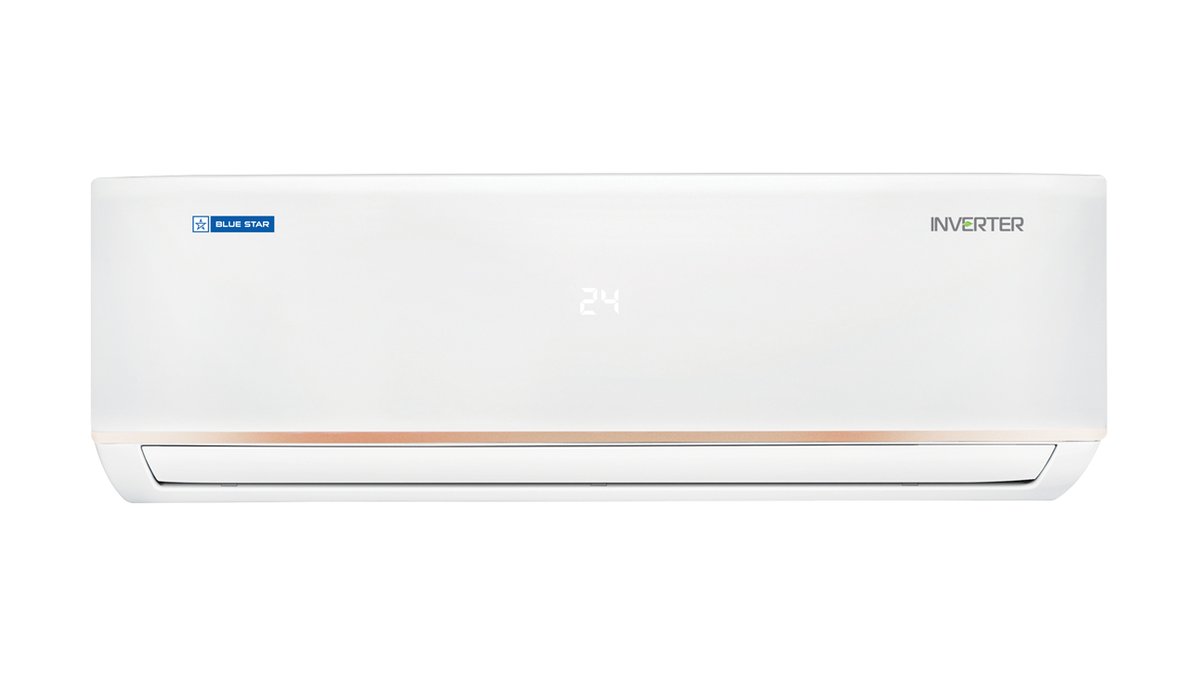
Photo: Blue Star
Basgo saysHeats for about a third. Pays off with daily use.
In a north Indian winter, the split AC on the bedroom wall sits idle while a heater glows below it. If that AC is a hot & cold model, it can heat the same room for about a third of the electricity. Here’s how, what it costs, where it stops working, and who should buy one.
How an AC heats a room
In summer, an AC moves heat out of your room. A hot & cold AC can run the same cycle in reverse, pulling heat out of the outdoor air and releasing it indoors, even when it’s cold outside. Because it moves heat instead of making it, it delivers several units of heat for every unit of electricity.
A heater can’t do that. A 2,000 W heater turns 2,000 W of electricity into 2,000 W of heat, a ratio of 1. A heat pump’s ratio is its COP (coefficient of performance), typically around 3 in mild conditions.
The maths at ₹8 a unit
Daikin’s 2026 1.5-ton hot & cold split (FTHT50XV) is rated at 5 kW of heating and draws about 6.5 amps doing it, roughly 1.5 kW of electricity. That’s a COP of about 3.3 at its rating. Daikin doesn’t say what outdoor temperature the rating assumes, and efficiency falls as it gets colder, so we’ve worked out three cases:
| Heating 2 kW of heat | Electricity per hour | Cost per hour |
|---|---|---|
| 2,000 W room heater | 2 kWh | ₹16.00 |
| Hot & cold AC at its rating (COP 3.3) | 0.61 kWh | ₹4.85 |
| On a 0–5°C night (assumed COP 2.5) | 0.80 kWh | ₹6.40 |
| Near its -10°C limit, with defrosting (assumed COP 1.5) | 1.33 kWh | ₹10.67 |
Over a season: four hours a night for 75 nights costs about ₹4,800 with a 2,000 W heater and about ₹1,600 with the AC at a COP of 3.
The limits
- Outdoor temperature: Daikin’s 2026 model heats from -10°C to 24°C outside; Panasonic’s 2026 model is listed for -10°C to 55°C; Blue Star’s window models heat down to -2°C or -10°C, depending on the model. Below the limit, the AC stops heating.
- Defrost pauses: in cold, damp weather, frost builds on the outdoor unit. The AC pauses heating for a few minutes to melt it (Blue Star calls it auto-defrost). It’s normal.
- Dry air: like any heating, it lowers the room’s humidity.
- One room at a time: it heats the room it’s in, so keep the door shut.
On the north Indian plains, winter nights usually stay well above -10°C, comfortably inside the range. In hill towns, check the night-time lows against the model’s limit.
What it costs to buy
Late-October listings on Amazon India for 1.5-ton hot & cold inverter ACs:
| AC | Price |
|---|---|
| Hitachi RSQG318HGXA (3-star) | ₹45,999 |
| Hitachi RAS.G418PHDIST (4-star) | ₹46,000 |
| Daikin FTHT50UV (3-star, earlier model) | ₹48,500 |
For comparison, a cooling-only Daikin 1.5-ton 5-star 2026 model listed at about ₹35,990. The models aren’t identical, but expect to pay roughly ₹10,000 more for heating. Daikin’s 2026 FTHT50XV carries a 10-year compressor warranty.
Who should buy one
Worth it if:
- You’d otherwise run a heater most winter nights: the running-cost saving pays back the premium in about three winters.
- You live on the north Indian plains or anywhere with a cold but not freezing winter.
- You’re buying or replacing an AC anyway: you get summer cooling and winter heating from one unit.
Skip it if:
- Your winter is mild or short, or you use a heater for only a few weeks.
- Your nights regularly fall below -10°C.
Honest verdict
A hot & cold AC is the cheapest way to heat a room with electricity, at roughly a third of a heater’s running cost in north Indian conditions. It costs about ₹10,000 more than a cooling-only AC, and that pays off if you heat most winter nights. For heating just a few nights a year, a room heater is fine: see which heater is safest. Before you buy any AC, read what the 2026 star labels mean.
Questions people ask
Is a hot and cold AC cheaper to run than a room heater?
Yes, usually much cheaper. A heat pump moves heat rather than making it: Daikin's 2026 1.5-ton hot & cold model is rated to deliver 5 kW of heat from roughly 1.5 kW of electricity, about 3.3 times as much. At ₹8 a unit, 2 kW of heat costs about ₹4.85 an hour from the AC and ₹16 from a heater. On colder nights the AC's advantage shrinks, but it stays ahead.
Does a hot and cold AC work in very cold weather?
Down to a limit. Daikin's 2026 hot & cold split heats with outdoor temperatures from -10°C to 24°C, and Panasonic's 2026 model is listed for -10°C to 55°C. As it gets colder, it uses more electricity for the same heat and pauses now and then to defrost its outdoor unit. On the north Indian plains, winter nights usually stay well above that limit.
How much more does a hot and cold AC cost?
In late October, 1.5-ton hot & cold inverter ACs from Hitachi and Daikin listed at about ₹46,000–48,500 on Amazon, against about ₹36,000 for a cooling-only Daikin 1.5-ton 5-star. The models aren't identical, but expect to pay roughly ₹10,000 more for heating.
Is a hot and cold AC worth it?
If you'd otherwise run a heater most winter nights, yes. Heating four hours a night for 75 nights costs about ₹4,800 with a 2,000 W heater and about ₹1,600 with a heat pump at three times the efficiency, so a ₹10,000 premium pays back in about three winters, and you get a summer AC too. Where winters are mild or short, skip it.
Can a normal AC heat a room?
No. A cooling-only AC can't run in reverse. Only models sold as 'hot & cold' or 'heat pump' can heat. Check the spec sheet for a heating capacity in kW and the outdoor temperature range for heating.